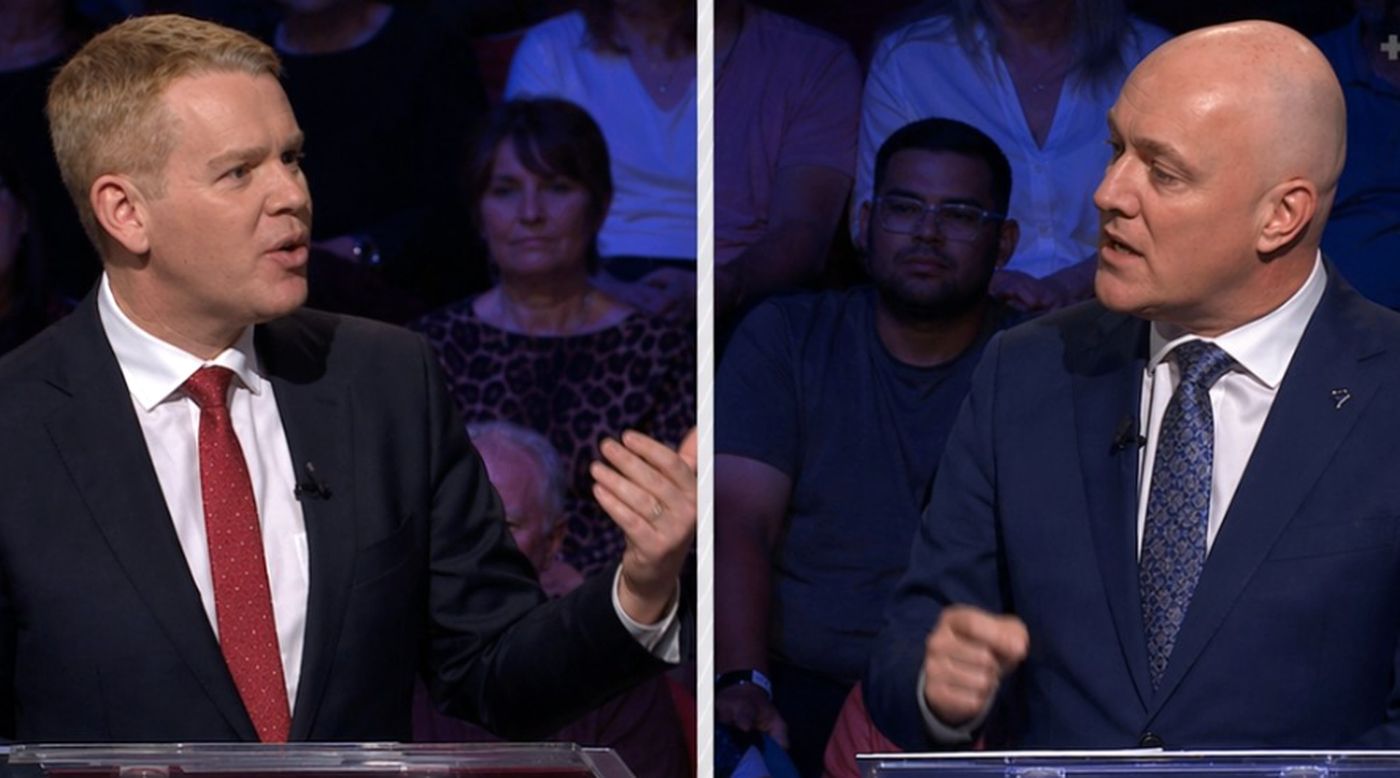
Question Time in the New Zealand House of Representatives turned heated on Wednesday as Labour leader Chris Hipkins directly challenged Prime Minister Christopher Luxon’s fitness to lead, linking internal National Party tensions to broader concerns over a worsening fuel supply situation and sharply declining business confidence.
The exchange came just one day after Luxon survived a confidence vote in his own National Party caucus, which he himself initiated following weeks of speculation about his leadership. The Prime Minister emerged claiming full support from his MPs but refused to take media questions afterward, describing the matter as closed.
Hipkins Opens Fire on Leadership and Economic Record
Hipkins began by asking why New Zealanders should have confidence in Luxon as Prime Minister “when on a day that business confidence has plummeted, the confidence he seems to be fighting for the most is the confidence of his own MPs.”
Luxon hit back by comparing economic records. He accused the previous Labour government under Hipkins and Jacinda Ardern of driving up spending by 84%, pushing inflation to 32-year highs, triggering 12 or 13 interest rate increases, slowing the economy, and increasing unemployment.
“I’d put my economic management record up against his any day of the week,” Luxon said. “We are fixing his mess and we are taking this country forward.”
Hipkins followed with a supplementary question pressing the Prime Minister on when the government would secure additional fuel supplies that Luxon had promised New Zealanders “by yesterday.” He suggested Luxon may have been “distracted by other matters” — a clear reference to the leadership vote.
Luxon rejected the implication, insisting the government was “very focused on the fuel crisis” and “doing an exceptionally good job of managing” it. He said officials were working through commercial options and would update the public once resolved.
“What’s Going to Run Out First — Fuel or His Leadership?”
In a pointed supplementary that drew laughter from the opposition benches, Hipkins asked: “What’s going to run out of fuel first? New Zealand or his leadership?”
Luxon dismissed the question as “inappropriate” scaremongering by the Leader of the Opposition. He urged Hipkins to “get in behind New Zealand and New Zealanders in a crisis,” adding that the country has “sufficient supplies of fuel” and the government was managing the situation to the best of its ability.
The question sparked immediate points of order. Opposition MPs argued it fell outside the Prime Minister’s direct ministerial responsibility. Speaker rulings were mixed: one described Seymour’s interpretation as “very generous,” while another allowed the question to proceed in a reframed way.
Luxon responded by saying the government had learned “everything” from the mistakes of the previous COVID response, including poor procurement and uncontrolled spending. He contrasted this with the current approach: getting organised early, maintaining constant contact with fuel importers, and avoiding the fiscal excesses of the pandemic era.
Broader Context: Fuel Crisis, Business Confidence, and Political Pressure
The parliamentary fireworks occur against a difficult backdrop for the coalition government. Business confidence has tumbled in recent months, falling to levels last seen during the 2024 recession, with surveys citing global geopolitical tensions — particularly conflict in the Middle East — as a major drag on outlook and investment.
At the same time, New Zealand faces ongoing fuel supply uncertainty. The government has released a Fuel Response Plan with phased measures and is advancing plans for a $1 billion LNG import terminal in Taranaki to provide long-term energy security and manage “dry year” risks in the hydro-dependent electricity system. Critics, including Labour, accuse the government of being unprepared and too slow to secure additional supplies amid rising global prices and potential disruptions.
Luxon and ministers have repeatedly emphasised that current stocks remain adequate in the short term (with reports of around 25 days of petrol and more when including fuel in transit) and that the focus is on commercial solutions rather than panic or heavy government spending.
Hipkins and Labour have used the crisis to portray the government as distracted by internal divisions and failing to deliver on cost-of-living promises, while Luxon continues to frame his administration as one that is cleaning up the previous government’s economic legacy and delivering disciplined fiscal management.
The confidence vote drama — which Luxon described internally as “cathartic” — has spilled into the House, amplifying questions about stability at the top of government at a time when many Kiwis are feeling the pressure of higher fuel prices and economic uncertainty.
As one opposition MP quipped during the session, the real test may be whether New Zealand runs out of fuel before the government runs out of answers — or political capital.