The Siege of the Twin Cities: Tom Homan, the Somali Community, and the Battle for the American Interior
What the White House calls a long-overdue restoration of the rule of law, local
The pre-dawn silence of the Twin Cities has, in recent weeks, been replaced by the low hum of idling engines and the sharp rap of federal knuckles on apartment doors.
What the White House calls a long-overdue restoration of the rule of law, local leaders and residents describe as a “reign of terror” targeting one of the nation’s most prominent immigrant enclaves.
At the center of this storm is Tom Homan, President Trump’s “Border Czar” and the architect of the most ambitious deportation campaign in American history.
The tension in Minnesota is not merely about policy; it is about the soul of a
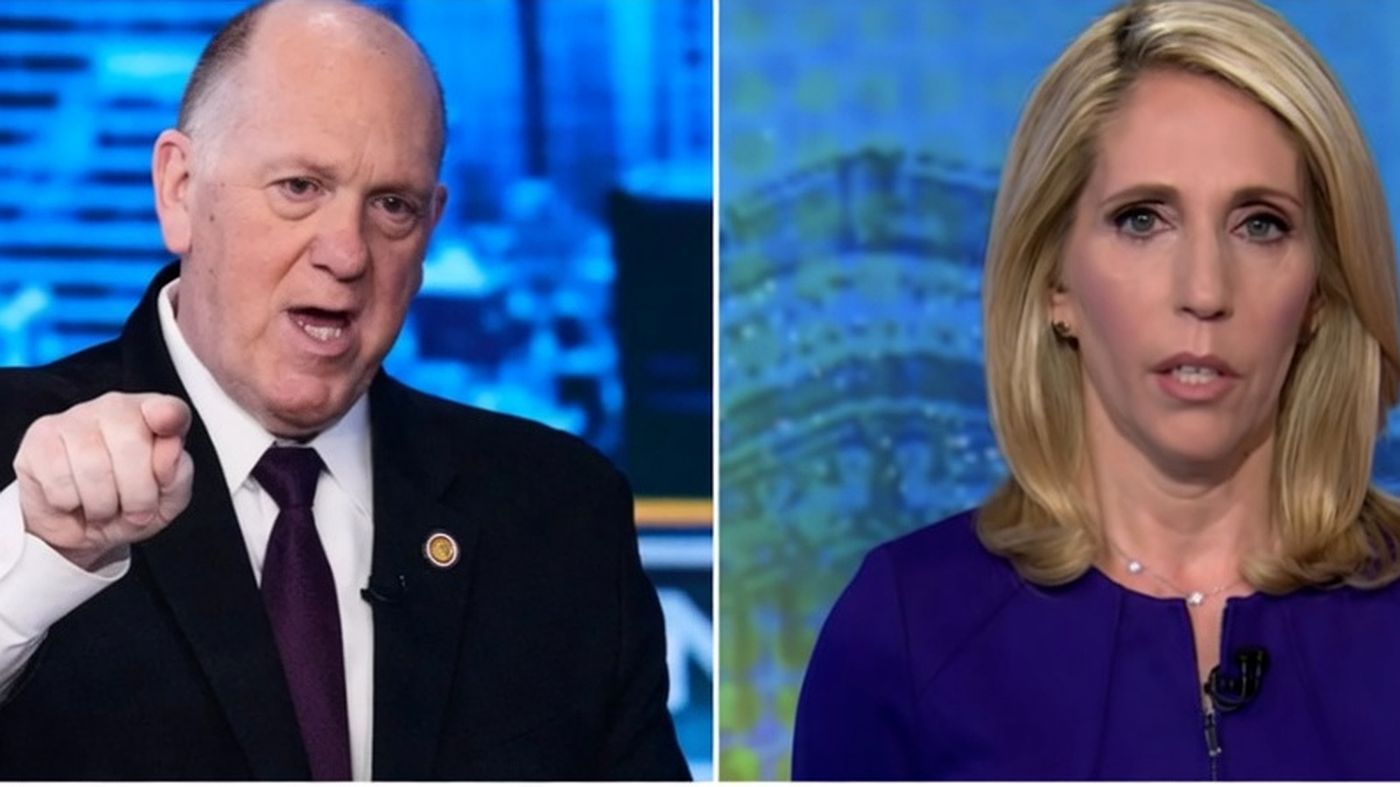
In a recent, high-stakes confrontation on CNN, Homan faced off against Dana Bash in a heated exchange that has become a lightning rod for the national debate over immigration, racial profiling, and the definition of American safety.
The tension in Minnesota is not merely about policy; it is about the soul of a community.
With an estimated 80,000 Somali-Americans calling the Twin Cities home—the vast majority of whom are naturalized citizens or legal residents—the sudden influx of Immigration and Customs Enforcement (ICE) agents has sent a localized shockwave through the state.
Appearing on CNN, Homan dismissed concerns that the raids were designed to
The “Gotaway” Ghost: Homan’s Mandate For Tom Homan, the math of the mission is simple, even if the execution is anything but.
Appearing on CNN, Homan dismissed concerns that the raids were designed to “scare” people. Instead, he framed the operations as a direct response to what he characterizes as the “open border” policies of the previous four years.
“Even we don’t know how many illegal Somalis there are,” Homan told Bash, leaning into a rhetoric of uncertainty that has become a hallmark of the current administration.
Homan’s argument rests on a pillar of public safety
He cited the “2 million known gotaways” from the Biden-Harris era—individuals detected by sensors or drones but never apprehended—as a primary justification for “flooding the zone” in interior cities like Minneapolis.
Homan’s argument rests on a pillar of public safety. “We’re going to focus on those illegal alien public safety threats,” he asserted.
To Homan, the Twin Cities represent a strategic necessity, particularly because of Minnesota’s “sanctuary” leanings.
The Profiling Controversy: “Reasonable Suspicion” or Racial Targeting
He argued that when local jails refuse to cooperate with ICE detainers, the federal government is forced to conduct high-risk community arrests that require more manpower and create more public friction.
The Profiling Controversy: “Reasonable Suspicion” or Racial Targeting? The most explosive segment of the interview centered on allegations of racial profiling.
Bash pressed Homan on reports from Minneapolis Councilman Jamal Osman, who claimed that Somali residents—many of whom are U. S. citizens—are being stopped on the street and asked for papers simply because of their appearance.
Homan’s rebuttal was “ruthless,” to use the parlance of his supporters
“Are agents stopping people because they look ‘quote-unquote’ Somali?” Bash asked.
Homan’s rebuttal was “ruthless,” to use the parlance of his supporters. He invoked the Fourth Amendment, stating that agents are trained every six months on the legal standards of “reasonable suspicion.”
“Appearance alone can’t raise reasonable suspicion,” Homan countered.
However, for the residents of the Cedar-Riverside neighborhood, the distinction
“It’s articulable facts.” He further noted that the Supreme Court has recently bolstered the administration’s tactics, validating the use of specific behavioral and contextual indicators to justify brief investigative detentions.
However, for the residents of the Cedar-Riverside neighborhood, the distinction between “articulable facts” and “looking Somali” feels like a legal fiction.
Stories have proliferated of grandmothers being questioned at grocery stores and fathers being detained in front of their children, only to be released once a U. S. driver’s license is produced. Homan remained unmoved.
He admitted that while a “zero-error” rate for detaining citizens is unlikely,
“I can’t tell you how many times an illegal alien claimed to be a U. S. citizen. It happens all the time,” he said.
He admitted that while a “zero-error” rate for detaining citizens is unlikely, the priority remains the removal of those who shouldn’t be here in the first place.
The “Garbage” Remark and the National Security Angle The interview took an even darker turn when Bash questioned whether the raids were motivated by the President’s own rhetoric.
Homan attempted to pivot, suggesting the President was referring specifically to
Earlier in the week, Donald Trump had referred to certain segments of the Somali immigrant population as “garbage” and expressed a desire to halt all immigration from the East African nation.
Homan attempted to pivot, suggesting the President was referring specifically to “public safety threats” and “national security threats.” But Bash pushed back, noting that the President’s comments were directed at the community as a whole.
The administration’s supporters often point to the “Feeding Our Future” scandal in Minnesota—a massive fraud case where millions in federal funds were diverted—as evidence of a systemic problem.
For Homan, the lack of robust vetting infrastructure in “high-risk” countries
Some commentators have gone as far as to allege, without providing direct links in every case, that diverted welfare funds have found their way back to Al-Shabaab, the terrorist group plaguing Somalia.
For Homan, the lack of robust vetting infrastructure in “high-risk” countries like Somalia justifies a “re-look” at everyone who has entered the country.
“Some of these countries don’t have the databases we have,” Homan explained. “They don’t even do the proper checks before they issue a passport.”
A Culture of Fear vs. A Culture of Law The fallout from the Homan interview has highlighted a deep cultural divide in the American electorate.
On one side are those who see Homan as a hero—a man finally willing to do the “dirty work” of enforcing the law. They see a country burdened by a “deficit of people stealing money” and a surge in crime that they link directly to the border.
On the other side are those who see a betrayal of American values. Critics argue that targeting a specific ethnic community based on the actions of a few, or based on their country of origin, creates a “second-class” tier of citizenship.
They point to the 1,200% increase in threats against ICE officers as a symptom of a broken social contract, where the enforcers of the law are increasingly viewed as an occupying force rather than a protective one.
Homan, however, maintains his trust in the “men and women of ICE.” While he conceded that any officer acting “out of policy” should be held accountable, his overarching message was one of unwavering support for the mission.
The Road Ahead: 600,000 and Counting As the calendar year draws to a close, Homan projected that the administration will reach nearly 600,000 deportations—a number he cites with pride as a fulfillment of a campaign promise.
But as the “Border Czar” continues his sweep through America’s interior, the cost of that promise is being tallied in the streets of Minneapolis.
For the Somali-American community, the question is no longer just about immigration status; it is about whether “the most powerful country in the world” still has room for them, or if the shadow of “reasonable suspicion” will follow them forever.
In the Twin Cities, the raids continue. The debate Rages. And Tom Homan, the man tasked with “fixing” the border from the inside out, shows no signs of slowing down.
Analysis: The Homan Doctrine To understand the current climate, one must look at the “Homan Doctrine”—a philosophy that views immigration enforcement not as a discretionary tool of diplomacy, but as a mandatory function of national sovereignty.
1. The End of “Prosecutorial Discretion”: Under previous administrations, ICE often focused solely on violent felons.
Homan has signaled that being in the country illegally is, in itself, enough to warrant deportation, regardless of how long an individual has lived in the community.
2. The Sanctuary City Conflict: By targeting Minneapolis, the administration is sending a clear message to “sanctuary” jurisdictions: if you don’t bring the individuals to us, we will come into your neighborhoods to get them.
This increases the visibility of enforcement, which supporters call “deterrence” and critics call “psychological warfare.”
3. The Vetting Narrative: By framing Somali immigrants as “improperly vetted” due to their home country’s lack of technology, the administration creates a legal pathway to re-examine the status of even those who entered through legal channels, such as the refugee program.
As the nation moves toward the midterms and the next phase of the Trump presidency, the images of ICE agents in the Twin Cities will likely remain a defining motif of an era defined by its borders—both the ones on the map and the ones being drawn through the heart of American communities.