The Virginia Supreme Court issued a ruling on Friday that has significantly altered the state’s congressional redistricting landscape, prompting sharp reactions from both political parties.
The decision is widely viewed as a victory for Republicans, effectively preserving or restoring several congressional districts that had been targeted for change under a map advanced by Democratic lawmakers.
The ruling appears to invalidate aspects of the Democratic-drawn plan, which critics had argued violated the Virginia Constitution by engaging in partisan gerrymandering aimed at flipping up to four Republican-held seats.
In contrast, former Virginia Governor Glenn Youngkin (R) hailed the ruling as a
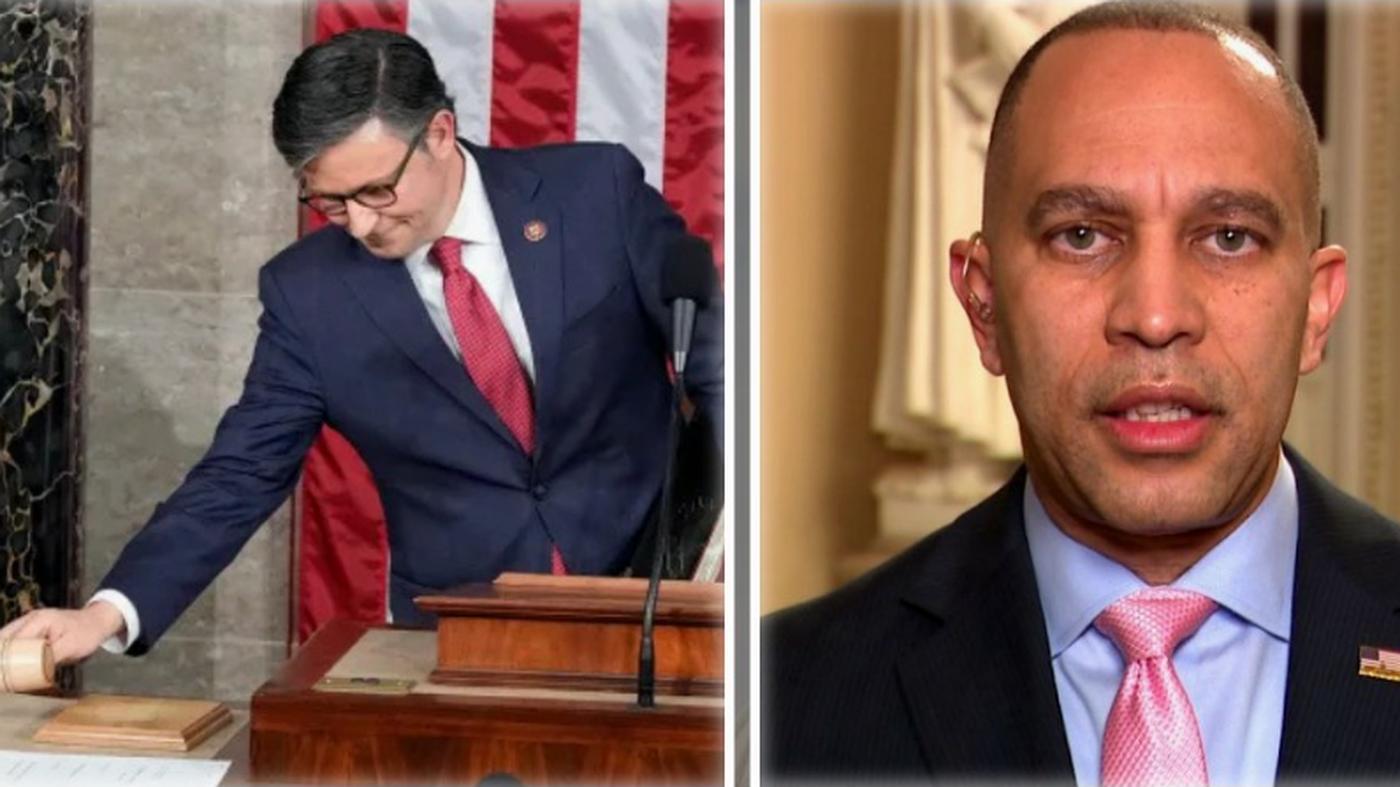
House Minority Leader Hakeem Jeffries (D-N. Y. ) responded quickly, expressing frustration and stating that Democrats would “explore other options” in response to the court’s decision.
Virginia Attorney General Jay Jones (D) issued a strongly worded statement accusing the court of following a “dangerous trend of tilting power away from the people.”
Jones said his office is carefully reviewing the unprecedented order and evaluating every legal pathway forward to defend the will of the people and protect the integrity of Virginia’s elections.
In contrast, former Virginia Governor Glenn Youngkin (R) hailed the ruling as a clear victory for constitutional principles. “Justice has been served,” Youngkin said.
“From the beginning, this was the most obvious violation of Virginia’s Constitution. Abigail Spanberger and Democrats in Richmond knowingly violated our constitution to disenfranchise millions of Virginians.
The Constitution prevailed, and Virginians will never forget this unlawful attempt to rob them of their voice in Congress.”
The dispute centers on congressional mapmaking following the 2020 census. Prior to the Democratic proposal, Virginia was widely regarded as having one of the fairest congressional maps in the country.
Under the challenged plan, roughly 48 percent of the state’s population would have been represented by only 9 percent of its congressional delegation if four Republican seats had flipped, according to critics.
Republicans argued the Democratic map was an unconstitutional partisan gerrymander designed to maximize Democratic gains at the expense of competitive or Republican-leaning districts.
The ruling has reignited broader debates over redistricting standards, the role
The Virginia Supreme Court’s decision has been described by legal observers as a significant affirmation of state constitutional limits on redistricting practices.
It comes at a critical time as the 2026 midterm elections approach and could have national implications for House control.
Republicans currently hold a narrow majority in the U. S. House, and preserving or expanding seats in Virginia would strengthen their position heading into the next cycle.
The ruling has reignited broader debates over redistricting standards, the role of state courts in policing partisan mapmaking, and the balance between legislative authority and constitutional protections for fair representation.
Democrats have framed the decision as undermining democratic processes, while Republicans portray it as a necessary correction that restores fair maps and prevents the dilution of voter voices.
As both sides assess next steps, Democrats have signaled they will pursue additional legal or legislative avenues, while Republicans celebrate what they view as a triumph of the rule of law over partisan maneuvering.
The developments in Virginia are being closely watched by strategists in both parties as an early indicator of how redistricting battles may unfold nationwide in the lead-up to 2026.