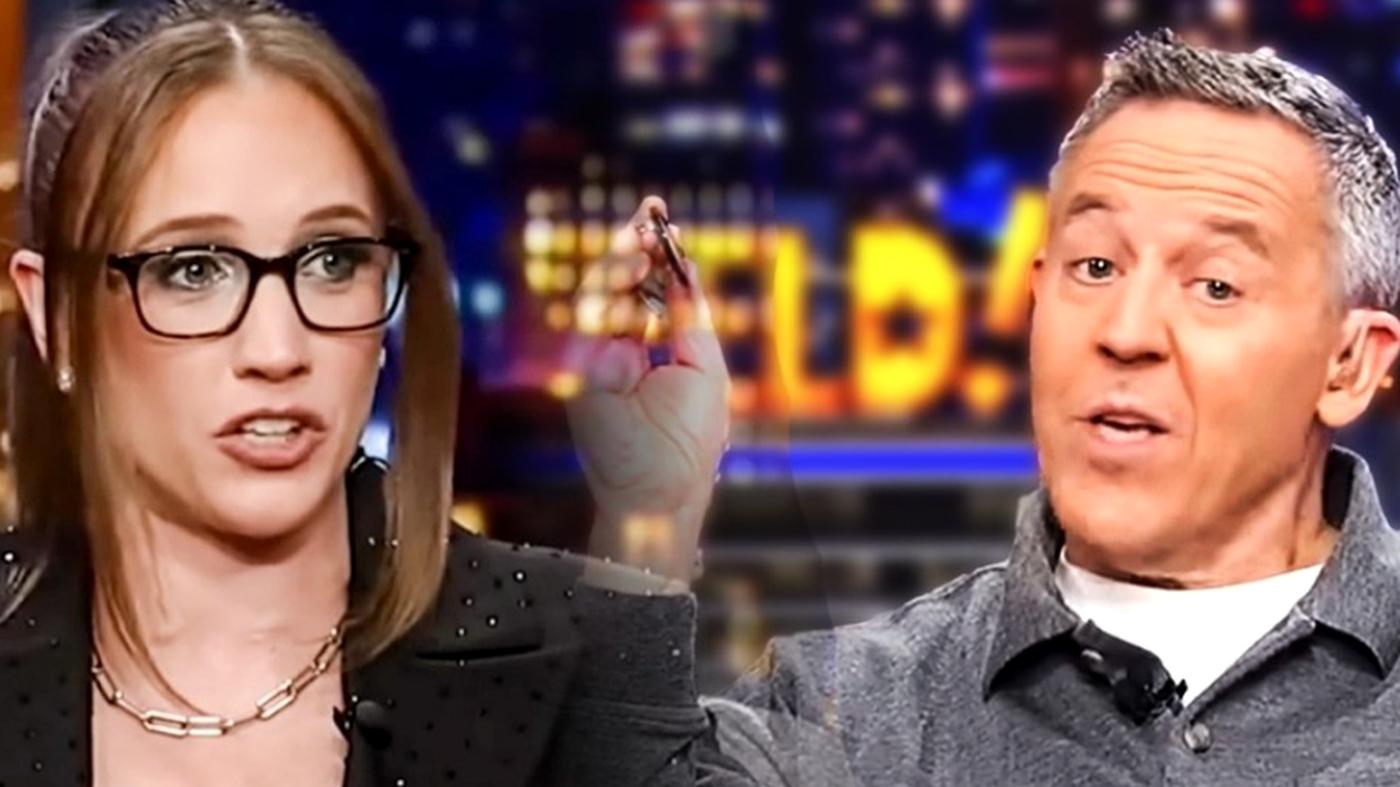
Greg Gutfeld & Kat Timpf ERUPT as Sunny Hostin’s Family Faces Explosive Fraud Allegations
What began as a lawsuit buried in legal filings quickly transformed into one of
The political and media worlds collided in spectacular fashion this week after allegations tied to Sunny Hostin’s husband exploded into public view, igniting a firestorm of criticism, viral reactions, and brutal mockery across television and social media.
What began as a lawsuit buried in legal filings quickly transformed into one of the most explosive cable-news controversies of the moment.
And at the center of the chaos stood two people who appeared more than ready to capitalize on every second of it: Greg Gutfeld and Kat Timpf.
The allegations immediately sent shockwaves online
The Fox News personalities unleashed a relentless on-air barrage targeting “The View” co-host Sunny Hostin after reports surfaced that her husband, orthopedic surgeon DR. Emanuel Hostin, had been named in a sweeping legal case involving alleged healthcare fraud, questionable billing practices, and accusations tied to illegal kickbacks.
The allegations immediately sent shockwaves online. According to reports tied to the lawsuit, nearly 200 defendants were named in what has been described as one of the largest RICO-related healthcare fraud cases New York has seen in years.
The claims accuse medical professionals and associated parties of participating in a system involving fraudulent medical billing and improper compensation arrangements tied to healthcare services.
And critics wasted no time connecting the controversy to Sunny Hostin herself
DR. Emanuel Hostin has denied wrongdoing, and no criminal conviction has occurred. But in today’s media climate, the accusations alone were enough to ignite a frenzy.
And critics wasted no time connecting the controversy to Sunny Hostin herself. For years, Hostin has built a reputation on “The View” as one of the program’s strongest voices on ethics, justice, accountability, and political outrage.
Her sharp legal background and aggressive commentary often placed her at the center of heated national debates involving morality, corruption, and social responsibility.
That question quickly became fuel for conservative media personalities eager to
Now, suddenly, critics were asking an uncomfortable question: What happens when the spotlight turns toward your own household?
That question quickly became fuel for conservative media personalities eager to expose what they viewed as hypocrisy.
Greg Gutfeld, never one to avoid controversy, immediately transformed the situation into a full-scale comedy spectacle.
To Gutfeld, the irony was irresistible
On-air, he mocked not only the allegations themselves, but also what he portrayed as the broader culture surrounding “The View” — a show critics have long accused of moral grandstanding and selective outrage.
To Gutfeld, the irony was irresistible. He joked that the daytime talk show had effectively become “a hospital displaying human misfailure,” turning the scandal into a metaphor for what he described as media hypocrisy and collapsing credibility among elite television personalities.
Kat Timpf joined in aggressively, amplifying the sarcasm while framing the controversy as another example of public figures demanding accountability from everyone else while struggling to withstand scrutiny themselves.
Hashtags related to Sunny Hostin began trending as users debated whether the
The internet immediately exploded. Clips from Gutfeld’s show spread rapidly across social media platforms, racking up millions of views as conservatives, critics of “The View,” and anti-establishment commentators piled onto the story.
Hashtags related to Sunny Hostin began trending as users debated whether the backlash represented fair criticism or opportunistic political theater.
But underneath the jokes and viral clips was something much bigger than daytime television gossip.
Critics argued that if similar allegations surrounded the family of a
The controversy tapped directly into America’s growing distrust of media personalities, celebrity political activism, and what many viewers perceive as a double standard in how scandals are covered depending on ideological alignment.
Critics argued that if similar allegations surrounded the family of a conservative television host, media coverage would likely look far more aggressive, relentless, and morally charged.
That perception became central to the outrage online. Gutfeld repeatedly leaned into that contrast, suggesting that media institutions often soften coverage for personalities aligned with progressive politics while aggressively targeting conservatives for far less serious controversies.
One clip resurfaced showing Sunny Hostin discussing healthcare and insurance
Whether viewers agreed or not, the argument clearly resonated. And as the jokes intensified, the situation became increasingly personal.
One clip resurfaced showing Sunny Hostin discussing healthcare and insurance companies on-air, referencing how her husband sometimes operated on patients and later fought insurers to receive payment for medical services.
Critics seized on the clip immediately. Online commentators claimed the segment now looked dramatically different in light of the lawsuit allegations, even though the context itself involved broader frustrations surrounding insurance reimbursement systems in American healthcare.
The reaction from Gutfeld and Timpf only intensified the spectacle further
That distinction did little to slow the backlash. Suddenly, every old clip, every political lecture, and every moral statement made on “The View” became ammunition for critics eager to dismantle the show’s credibility piece by piece.
The reaction from Gutfeld and Timpf only intensified the spectacle further. What started as political commentary evolved into something resembling a televised roast.
Gutfeld mocked the show’s hosts relentlessly, turning their personalities into punchlines while accusing them of spending years preaching morality from what he portrayed as a deeply selective and partisan platform.
She argued the scandal highlighted how quickly narratives shift depending on who
Timpf took a slightly different angle, focusing heavily on the media dynamics surrounding the story itself.
She argued the scandal highlighted how quickly narratives shift depending on who becomes the target of controversy.
According to her framing, many media organizations suddenly appeared cautious and restrained once the allegations touched a major progressive television personality.
The underlying implication was clear: Would the reaction be different if the political identities were reversed?
That question helped push the controversy far beyond entertainment news. It became part of a much larger political conversation already dominating American media — one centered around institutional trust, ideological bias, and public exhaustion with celebrity activism.
For critics of “The View,” the scandal seemed to confirm years of frustration with what they viewed as self-righteous political commentary disconnected from accountability.
For supporters of Sunny Hostin, however, the backlash looked excessive, opportunistic, and deeply personal. Many pointed out an important distinction often lost during viral media storms:
Allegations are not convictions. No court has found DR. Emanuel Hostin guilty of wrongdoing, and legal processes remain ongoing.
Yet in the age of social media, accusations themselves often become the story long before facts are fully resolved.
That reality added another layer of tension to the unfolding spectacle. Even some viewers uncomfortable with “The View” questioned whether Gutfeld and others were turning an unresolved legal matter into pure entertainment before all evidence had been presented publicly.
But nuance rarely survives once internet outrage takes control. And outrage was exactly what the media ecosystem rewarded.
Every sarcastic segment, every clipped joke, every dramatic headline generated more clicks, more shares, and more engagement.
The controversy became a perfect storm of celebrity politics, media tribalism, legal intrigue, and public hypocrisy debates all colliding at once.
Meanwhile, “The View” itself faced growing pressure over how to respond. Critics accused the show of avoiding direct engagement with the controversy while continuing normal programming.
Others argued that the show had no obligation to publicly litigate allegations involving a host’s spouse before legal proceedings conclude.
Still, the silence only fueled speculation. And for Greg Gutfeld, that silence became part of the joke itself.
At one point, he sarcastically suggested that if someone from conservative media faced allegations of similar magnitude, cable networks would already be running nonstop countdown clocks and primetime specials.
The audience erupted. Because regardless of political affiliation, many Americans increasingly believe media coverage itself has become inseparable from ideology.
That belief is precisely why stories like this spread so explosively. The legal allegations may have sparked the controversy, but the real engine driving the outrage is America’s growing obsession with hypocrisy, tribalism, and public accountability.
Viewers no longer simply consume scandals. They weaponize them. Every controversy instantly becomes part of a broader cultural war where both sides race to frame themselves as victims of unfair treatment while portraying opponents as morally bankrupt.
That dynamic was visible in nearly every reaction surrounding Sunny Hostin’s situation. To critics, this was long-overdue accountability finally landing at the doorstep of people who spent years attacking others.
To defenders, it was another example of politically motivated outrage amplified by entertainment-driven media personalities who profit from chaos.
And in today’s media environment, both narratives can thrive simultaneously. As the legal process continues, the long-term impact on Sunny Hostin’s public image remains unclear.
Television audiences are notoriously unpredictable, and scandals often fade as quickly as they explode. But for now, the controversy has already achieved one thing beyond dispute:
It has become one of the most talked-about cable news spectacles in America. And with Greg Gutfeld and Kat Timpf continuing to pour gasoline on the fire night after night, the political-media circus surrounding the case shows no signs of slowing down anytime soon.