New York Power Struggle: The Collapse of a $1B Tax Plan Targeting Wall Street
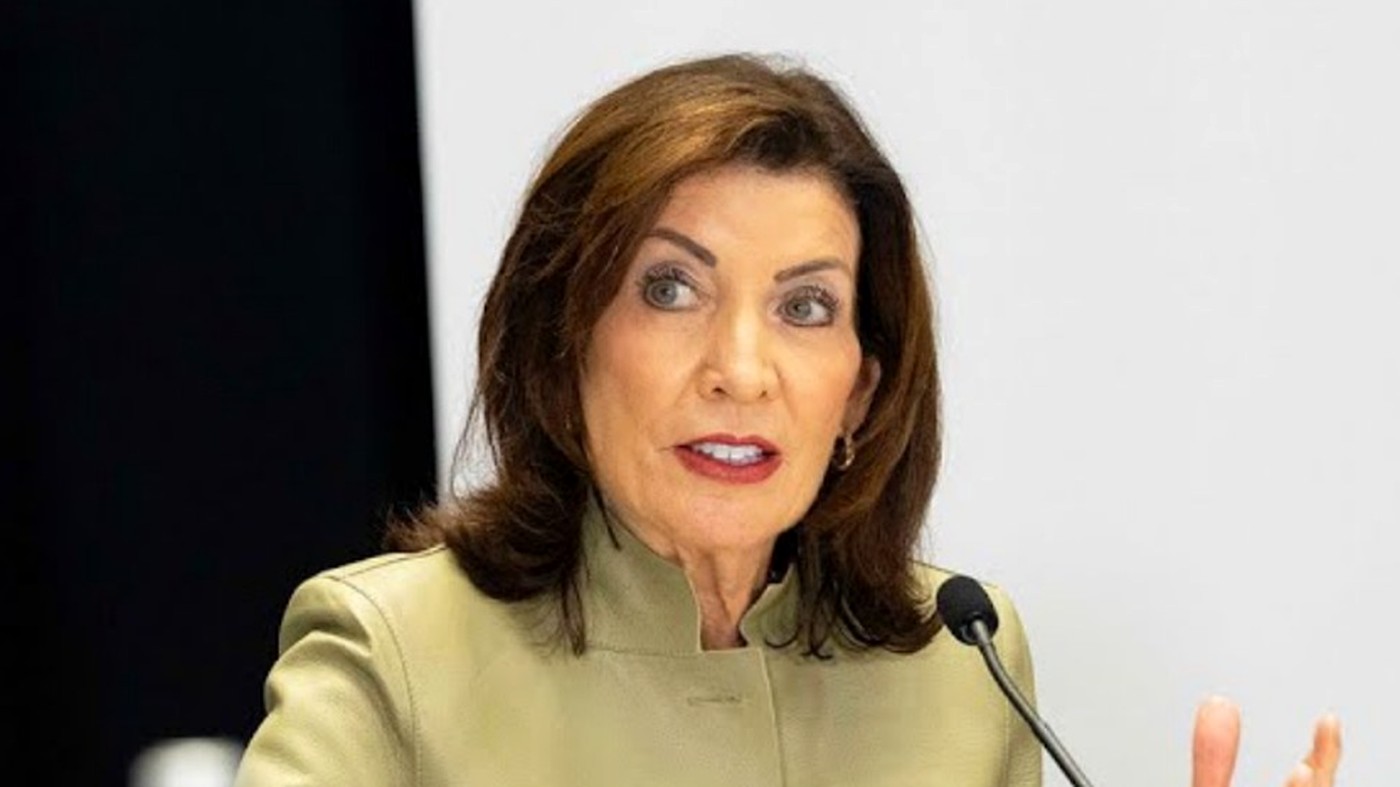
A high-stakes political confrontation is unfolding in New York, where a proposed $1 billion tax plan targeting Wall Street has been abruptly halted after intervention from Governor Kathy Hochul, triggering a wave of controversy, political tension, and heated debate across the city’s financial and governmental landscape.
The plan, valued at approximately $1 billion in projected revenue, was framed by
At the center of the storm is Mayor Mamdani’s ambitious proposal, a sweeping fiscal reform plan designed to impose additional taxes on major financial institutions operating in New York City.
The plan, valued at approximately $1 billion in projected revenue, was framed by its supporters as a bold attempt to address widening economic inequality, strengthen public services, and provide much-needed funding for housing, transportation, and social infrastructure.
However, the proposal quickly became one of the most divisive political issues in recent memory, drawing sharp lines between progressive reform advocates and fiscal moderates concerned about the potential consequences for the city’s financial sector.
Hochul moves to weaken aggressive New York climate law | 1010 WINS
While supporters argued that Wall Street’s immense wealth justified higher contributions to public welfare, opponents warned that such measures could destabilize New York’s competitive position as a global financial hub.
Hochul moves to weaken aggressive New York climate law | 1010 WINS
The situation escalated dramatically when Governor Hochul reportedly moved to block the plan, effectively shutting down its path forward before it could advance through the state-level approval process required for implementation.
For decades, New York has relied heavily on its financial sector as a
The decision immediately sparked political backlash from progressive circles, who accused state leadership of undermining efforts to rebalance economic power in one of the most unequal cities in the United States.
For decades, New York has relied heavily on its financial sector as a cornerstone of its economic identity.
Wall Street generates billions in tax revenue, supports hundreds of thousands of jobs, and attracts global investment that fuels the city’s broader economic ecosystem.
Mayor Mamdani’s proposal was positioned as a structural response to growing
Any policy perceived as destabilizing this foundation inevitably triggers intense scrutiny from policymakers, industry leaders, and economic analysts.
Mayor Mamdani’s proposal was positioned as a structural response to growing concerns about affordability, housing shortages, and infrastructure strain across the city.
Rising rents, increased cost of living, and uneven wealth distribution have placed significant pressure on local communities, prompting calls for more aggressive fiscal interventions targeting high-income sectors.
Proponents of the plan argued that such investments were necessary to ensure
The proposed $1 billion tax was intended to be allocated across multiple public initiatives, including affordable housing development, expansion of public transit systems, and increased funding for education and healthcare programs.
Proponents of the plan argued that such investments were necessary to ensure long-term urban stability and prevent further socioeconomic fragmentation.
However, critics within both business and political circles expressed concern that the plan could have unintended consequences.
Additional taxation, they argue, could incentivize firms to relocate certain
Financial institutions operating in New York already face one of the most complex regulatory environments in the world, along with high operational costs and intense global competition.
Additional taxation, they argue, could incentivize firms to relocate certain operations to other states or financial centers offering more favorable conditions.
Cities such as Miami, Dallas, and Chicago have increasingly positioned themselves as alternative financial hubs, actively courting investment firms with lower taxes and streamlined regulatory frameworks.
Governor Hochul’s decision to shut down the plan reflects the delicate balancing
In this context, even incremental policy changes in New York are closely watched by industry leaders assessing long-term strategic positioning.
Governor Hochul’s decision to shut down the plan reflects the delicate balancing act faced by state leadership.
On one hand, there is growing political pressure to address inequality and fund essential public services.
The move has intensified debate over the future direction of New York’s economic
On the other hand, maintaining New York’s status as the world’s leading financial center requires preserving a competitive environment that continues to attract global capital and corporate headquarters.
The move has intensified debate over the future direction of New York’s economic policy. Progressive lawmakers and advocacy groups argue that the state is failing to adequately leverage its most profitable industries to address systemic social challenges.
They contend that institutions like Wall Street have a responsibility to contribute more substantially to the public good, particularly during periods of economic strain.
They emphasize that financial firms are highly mobile and can adjust their
Meanwhile, business groups and financial sector representatives caution that aggressive tax policies could undermine the very economic engine that funds much of the city’s public budget.
They emphasize that financial firms are highly mobile and can adjust their operational footprint in response to regulatory and tax changes, potentially leading to long-term revenue losses if conditions become unfavorable.
The political clash between City Hall and the Governor’s office highlights deeper ideological divisions within New York’s leadership structure.
This tension is not new, but the scale of the $1 billion proposal has brought it
While Mayor Mamdani’s administration has pursued a more progressive economic agenda focused on redistribution and public investment, Governor Hochul has taken a more cautious approach, prioritizing economic stability and competitiveness at the state level.
This tension is not new, but the scale of the $1 billion proposal has brought it into sharper focus.
The stakes are particularly high given the symbolic importance of Wall Street, not only as a financial center but as a global benchmark for market activity and economic influence.
As news of the plan’s rejection spread, reactions across the city were swift and polarized.
Supporters of the proposal expressed frustration, arguing that political hesitation continues to delay necessary reforms aimed at addressing long-standing inequalities.
Some described the decision as a missed opportunity to fundamentally reshape how wealth is distributed in one of the richest cities in the world.
On the other side, opponents of the plan welcomed the decision, viewing it as a necessary safeguard against policies they believe could harm economic growth and investor confidence.
They argue that maintaining a stable and predictable tax environment is essential for sustaining New York’s leadership in global finance.
Economists observing the situation note that the broader implications extend beyond a single tax proposal.
The debate reflects ongoing national tensions over how to balance economic growth with social equity, particularly in major metropolitan centers where wealth concentration and cost-of-living disparities are most pronounced.
The financial services industry itself is undergoing significant transformation, driven by technological innovation, digital trading platforms, and increasing geographic mobility.
Inside the $1 Billion Clash: Why Hochul Shut Down Mamdani’s Wall Street Tax Plan
These shifts have reduced the traditional dependency on physical proximity to Wall Street, giving firms greater flexibility in choosing where to locate operations.
In this evolving landscape, policy decisions carry heightened importance. Even proposals that do not ultimately pass can influence corporate perceptions of regulatory stability and long-term planning strategies.
For now, the $1 billion tax plan remains blocked, but the political fallout is far from over.
Analysts expect continued debate within state and city government circles, as well as renewed discussions about alternative approaches to funding public services without risking capital flight.
What remains clear is that New York’s economic future is increasingly shaped by the tension between competing visions: one that prioritizes aggressive redistribution to address inequality, and another that emphasizes maintaining the city’s competitive edge in a rapidly globalizing financial system.
The confrontation over Mamdani’s proposal is likely to be remembered not just as a policy dispute, but as a defining moment in the ongoing struggle to determine the direction of America’s most influential financial city.
As the debate continues, one question lingers at the center of it all: can New York reshape its economic model without weakening the very system that made it a global financial powerhouse?
The answer, for now, remains uncertain.