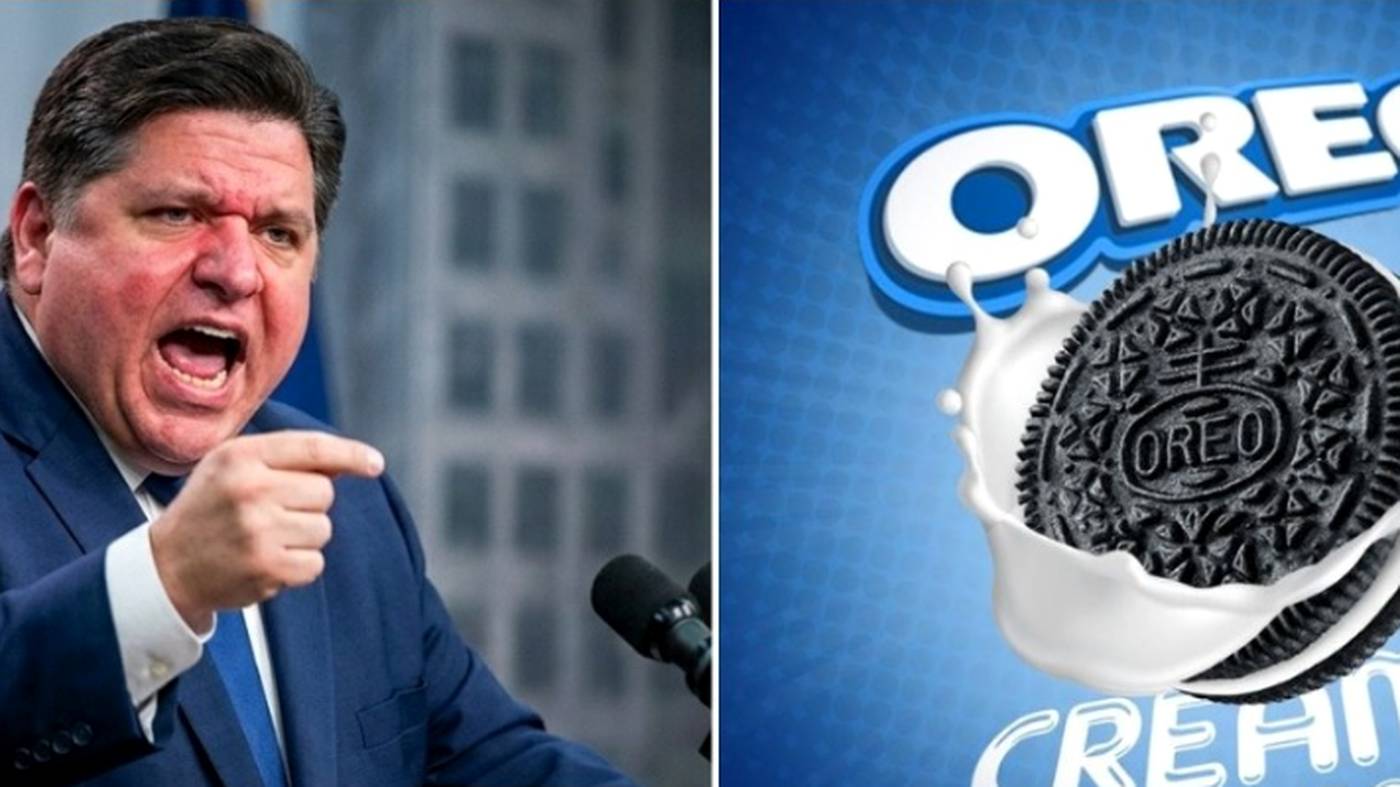
ILLINOIS GOVERNOR ERUPTS As Oreo Officially ABANDONS Chicago After 63 Years — 600 Jobs Shipped to Mexico
In the shadow of Chicago’s southwest side, a quiet factory that once symbolized American manufacturing greatness has gone silent. For 63 years, generations of union workers walked through those
Doors to produce one of the most beloved snacks on the planet — the Oreo cookie.
Twist it, lick it, dunk it in milk. It was an American ritual, made right here in Illinois by 600 hardworking men and women who showed up shift after shift.
That era is now officially over. Mondelēz International, the $28 billion snack giant behind Oreo, Chips Ahoy, Ritz, and dozens of household brands, has confirmed it is moving production lines from Chicago to its existing facility in Silao, Mexico.
The 600 jobs attached to that plant are going with it. After
Months of tense negotiations, the company gave the union an ultimatum: accept deep wage and benefit cuts or watch the lines disappear.
The union refused. The company followed through. And now, an American icon is leaving American soil.
Governor JB Pritzker stepped to the microphone visibly frustrated. His administration released statements calling the decision “deeply disappointing.”
He spoke of “ongoing conversations,” of “fighting for Illinois
Workers,” and of broader economic plans meant to protect jobs.
Yet the timing tells the real story. The press conferences came after the decision was locked in.
The promises arrived after the production schedule had already been rewritten south of the border.
This wasn’t a surprise ambush. Workers had raised alarms for
Months. The company had been clear about its cost concerns.
But once again, in Illinois, action came too late — and rhetoric replaced real structural change.
The mechanics behind this move are brutally simple and ruthlessly numerical. Illinois ranks among the highest-cost states for manufacturing in America.
Combined corporate income taxes sit near the top of the
National charts. Workers’ compensation premiums are punishing.
Energy costs run significantly higher than in many competing states and countries. Add in Cook County property taxes, layers of regulatory compliance, and one of the largest unfunded pension liabilities in the entire United States, and the picture becomes crystal clear.
In Silao, Mexico, under the USMCA trade framework, Mondelēz can produce the same cookies at a fraction of the labor cost, ship them back into the United States with minimal tariff friction, and protect its profit margins.
The plant already exists. The infrastructure is paid for. The
Move requires no new construction and almost no ramp-up time.
On a spreadsheet, the choice was never close. This isn’t an isolated corporate cost-cutting story.
It is the latest chapter in Illinois’ slow-motion economic hemorrhage. Boeing famously relocated its global headquarters out of Chicago.
Caterpillar, an Illinois manufacturing legend for over a
Century, moved its headquarters to Texas. Citadel, one of the world’s most powerful hedge funds, fled to Miami.
Morton Salt, with roots stretching back more than a hundred years, left for Kansas. The New York Stock Exchange shut down its Chicago trading floor after 140 years.
John Deere has been steadily shifting production to Mexico in wave after wave. These are not fringe companies.
These are institutions that were once synonymous with Illinois
Identity. Each departure followed the same pattern: quiet internal calculations, growing frustration with costs and bureaucracy, then the inevitable announcement.
Each time, politicians expressed disappointment. Each time, the underlying problems remained untouched. Illinois has lost over 1. 5 million residents in roughly two decades — one of the worst population exoduses in America.
People are leaving approximately every nine minutes. When surveyed, the top reason isn’t crime or weather.
It’s taxes. The fiscal spiral is vicious and self-reinforcing
Fewer businesses and high earners mean less revenue, which leads to higher taxes and more debt, which drives even more departures.
The cycle has no natural brake. For the 600 workers now facing an uncertain future, this isn’t theory — it’s devastating reality.
These are mid-career professionals: line operators, supervisors, quality control technicians, and maintenance experts who built their lives around stable union wages.
Mortgages, car payments, college funds, and local small
Businesses all depended on that factory’s rhythm.
When those paychecks disappear, the damage doesn’t stop at the factory gate. It ripples outward — hitting diners, auto shops, grocery stores, and schools that rely on the property tax base those wages supported.
Retraining programs and transition assistance sound compassionate in press releases. In real life, a 47-year-old with decades of specialized experience, two kids in school, and deep roots in the community faces a brutal uphill battle.
Loyalty to Chicago doesn’t appear on a balance sheet. Outrage doesn’t lower workers’ comp premiums.
Emotional appeals don’t fix Illinois’ structural disadvantages. Governor Pritzker’s team points to workforce development initiatives and economic agendas.
Union leaders are organizing rallies and calling for boycotts. Social media fills with worker testimonials and consumer anger.
None of it changes the cold arithmetic that convinced Mondelēz executives to pull the trigger.
The deeper tragedy is how preventable this feels. Illinois sits in the heart of the Midwest with unmatched transportation infrastructure, a massive consumer market nearby, and a legacy of American industrial might.
Yet time after time, companies conclude the same thing: the cost of staying outweighs the benefit.
What happens when the next manufacturer on the southwest side runs the same numbers? What happens when another iconic brand decides the math no longer works?
Illinois leadership has yet to deliver a convincing answer to the only question that matters: what specific, structural changes will make this state competitive again for the companies still here — and for those watching nervously from the sidelines?
The Oreo factory closure is painful precisely because it feels symbolic. An American childhood staple, born and long raised in Chicago, is now being manufactured somewhere else.
Families who once took pride in “making the cookies” now face unemployment lines. Neighborhoods already struggling with economic pressure absorb another blow.
Mondelēz isn’t abandoning Chicago entirely — its headquarters remain for now — but the symbolism cuts deep.
When even the company that makes Oreo decides Illinois is no longer the right place to bake them, it sends a chilling message to every other employer running the numbers late at night.
The workers deserved better. They showed up faithfully for 63 years. They built a product loved around the world.
In return, they got an economy that made their jobs unsustainable. Illinois stands at a crossroads.
More companies are watching. More spreadsheets are open. More families are wondering if their livelihood is next.
Statements of disappointment and promises to “fight” have been tried before. They no longer move the needle.
The real fight — the one that actually matters — is whether Illinois can confront its punishing cost structure, its pension crisis, and its tax-and-spend trajectory before the next iconic name packs up and leaves.
Because Oreo will not be the last. The only question left is how many more American dreams have to be shipped across the border before leaders finally admit the math has changed — and start doing something real about it.