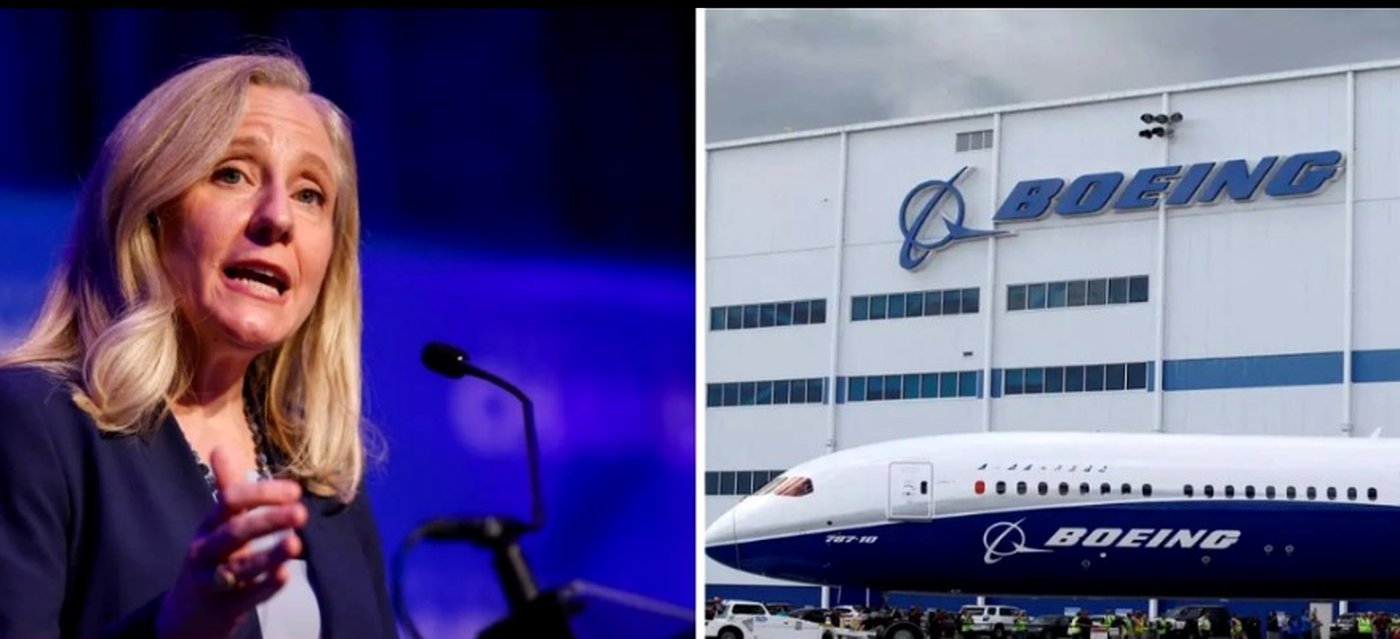
🚨 ECONOMIC EARTHQUAKE: $74 BILLION BOEING DEFENSE HQ ABANDONS VIRGINIA — “CALIFORNIA-IZATION” STRIKES AFTER NEW DEM GOVERNOR’S DAY-ONE SHOCK MOVES
In a move that has sent shockwaves through Virginia’s political and business establishment, Boeing — one of America’s most powerful defense giants — has officially pulled its Defense, Space & Security headquarters out of Arlington and returned it to St.
Louis, Missouri. The announcement came on February 18, 2026 —
Just 32 days after Democrat Abigail Spanberger was sworn in as Virginia’s first female governor.
What was once hailed as a major economic victory for the Commonwealth has now become one of its most painful early setbacks, raising urgent questions about the new administration’s impact on the state’s prized business climate.
The numbers are staggering. Boeing’s defense segment generated nearly $20 billion in revenue in 2025 alone.
The company carried a massive $74 billion defense backlog —
Contracts for everything from next-generation fighter aircraft to nuclear command systems that keep America safe.
For years, that power center sat right outside the Pentagon’s doorstep in Arlington, Virginia. Now it’s gone.
The future of critical programs like the F-47 fighter jet and advanced nuclear command planes will be directed from Missouri, not Virginia.
This isn’t just a headquarters shuffle. It’s a generational
Shift in America’s defense industrial base.
The story begins in 2017 when Boeing dramatically relocated its Defense, Space & Security headquarters from St.
Louis to Arlington, planting itself at the heart of American military decision-making. In 2022, the company went even further, moving its global headquarters from Chicago to Arlington as well.
Virginia celebrated. Governors boasted. Thousands of
High-paying jobs and billions in economic activity followed. The state positioned itself as the undisputed capital of American aerospace and defense.
That golden era lasted until January 17, 2026. On her very first day in office, Governor Spanberger wasted no time signaling a sharp change in direction.
She signed a flurry of executive orders covering healthcare, housing, education, and — most controversially — immigration enforcement.
One of the earliest moves rescinded her Republican
Predecessor’s directive encouraging cooperation between Virginia law enforcement and federal immigration authorities.
The message was loud, immediate, and unmistakable: Virginia was shifting left. Critics wasted no time connecting the dots.
Representative Pat Fallon of Texas, a member of the House Armed Services Committee, publicly stated that in less than a month, Spanberger had shown a commitment to turning Virginia into California.
Whether fair or not, that perception traveled fast through
Corporate boardrooms across the defense sector.
Businesses live and die on stability, predictability, and a welcoming environment for major federal contractors.
When those signals change overnight, decisions follow. On February 18, Boeing made it official. The company announced it was returning its Defense, Space & Security headquarters to St.
Louis, where much of its actual manufacturing and engineering
Workforce — around 18,000 strong — had remained all along.
Boeing Defense CEO Steve Parker framed the decision in practical terms: “It’s important for leaders to be side-by-side with our teammates, listening to their feedback and acting to remove obstacles as we continue to stabilize and strengthen our business.”
The official line was operational alignment. The timing, however, told a much louder story. Missouri erupted in celebration.
Defense Secretary Pete Hegseth personally flew to St. Louis to
Hail the move as a “return to the heartland” and a victory for the people who actually build America’s weapons systems.
Missouri Governor Mike Parson and Senator Eric Schmitt praised the decision, declaring St. Louis the new beating heart of American defense innovation.
The F-47 program, long-range strike weapons, and classified projects would now be managed closer to the factory floor.
Missouri gained an economic trophy. Virginia lost its most
Valuable corporate tenant in modern history.
Governor Spanberger’s office responded with a carefully worded statement noting that Boeing’s global headquarters would remain in Arlington and that “daily operations will not be affected.”
No press conference. No urgent economic action plan. No direct acknowledgment of the $74 billion shift in defense contracts.
The tone was calm reassurance while the defense world watched
One of Virginia’s crown jewels walk out the door.
This departure raises uncomfortable questions that go far beyond one company. Virginia’s competitive edge in defense had rested on three pillars: physical proximity to the Pentagon, a stable and business-friendly political environment, and aggressive leadership that fought hard to attract and retain major employers.
On January 17, two of those three pillars suddenly looked shaky. The Pentagon is still there, but the political winds had shifted dramatically.
Corporate site selectors, government relations teams, and other major defense players are now quietly running the same calculations Boeing apparently made.
The broader implications are enormous. Defense contracting is not like opening a retail store. These are multi-decade relationships built on trust, security clearances, institutional knowledge, and political stability.
When a company with Boeing’s footprint decides to move its leadership nerve center, it sends a signal to the entire industry.
Other contractors with significant Virginia footprints are watching closely. Will they stay? Will they hedge their bets?
Will future expansions go elsewhere? Missouri, by contrast, is positioning itself as the future of American aerospace.
With Boeing’s leadership back in the same city as its massive workforce and production lines, the state gains not just jobs but strategic importance.
Local leaders are already talking about strengthening the defense corridor for decades to come. The contrast could not be starker: one state gaining momentum, the other issuing press releases.
For Virginia workers, taxpayers, and businesses, the loss stings. High-paying engineering and executive jobs tied to the headquarters may shift.
Economic ripple effects could touch suppliers, real estate, restaurants, and local services in Northern Virginia.
The state had invested heavily — politically and financially — in becoming a defense powerhouse.
Watching that advantage erode so quickly after a change in leadership is causing real anxiety.
Boeing’s move was not about losing love for Virginia overnight. Companies don’t abandon billion-dollar investments on a whim.
The workforce proximity argument existed for years under previous governors. What changed was the political environment.
In boardrooms, perception is reality, and the early signals from Richmond apparently created enough doubt to trigger action.
That 32-day timeline has become the defining statistic of this controversy. As the dust settles, Virginia faces a critical choice.
Will the new administration read this as a serious warning and work aggressively to rebuild business confidence?
Or will it downplay the departure and push forward with its agenda? The answer will shape the state’s economic future for years.
Major employers do not wait for governments to catch up. They move where the conditions are best.
This episode reveals a deeper truth about modern state economies: in a highly competitive national landscape, companies vote with their feet.
Virginia spent years winning Boeing’s trust and headquarters. Losing meaningful control of that relationship in just over a month is more than a logistical story — it is an economic alarm bell ringing loud and clear across the Commonwealth.
The money has moved. The question now is whether Virginia’s leadership will move fast enough to stop the next one from following.